Graffiti Removal services in LaGrange, GA
Graffiti Removal Service EXPERTS
Swiftly and safely strips away unwanted vandalism from brick, stone, and siding without harming the underlying material.
Professional Graffiti Removal to Restore a Cleaner, More Presentable Exterior
Unwanted paint, tagging, and spray-painted markings can change the appearance of walls, entryways, fences, and other visible property surfaces. Our painting and pressure washing services support a cleaner exterior, with related options such as pressure washing for compatible durable surfaces and exterior painting for surfaces that need a refreshed coating after graffiti removal when appropriate.
Effective graffiti removal starts with identifying the surface and the type of marking involved. Paint on sealed concrete may respond differently from spray paint on brick, stone, vinyl, metal, or painted siding. We consider the material, existing finish, age of the marking, and surrounding conditions before choosing a suitable removal approach. The goal is to reduce or remove unwanted markings while avoiding unnecessary damage to the underlying surface.
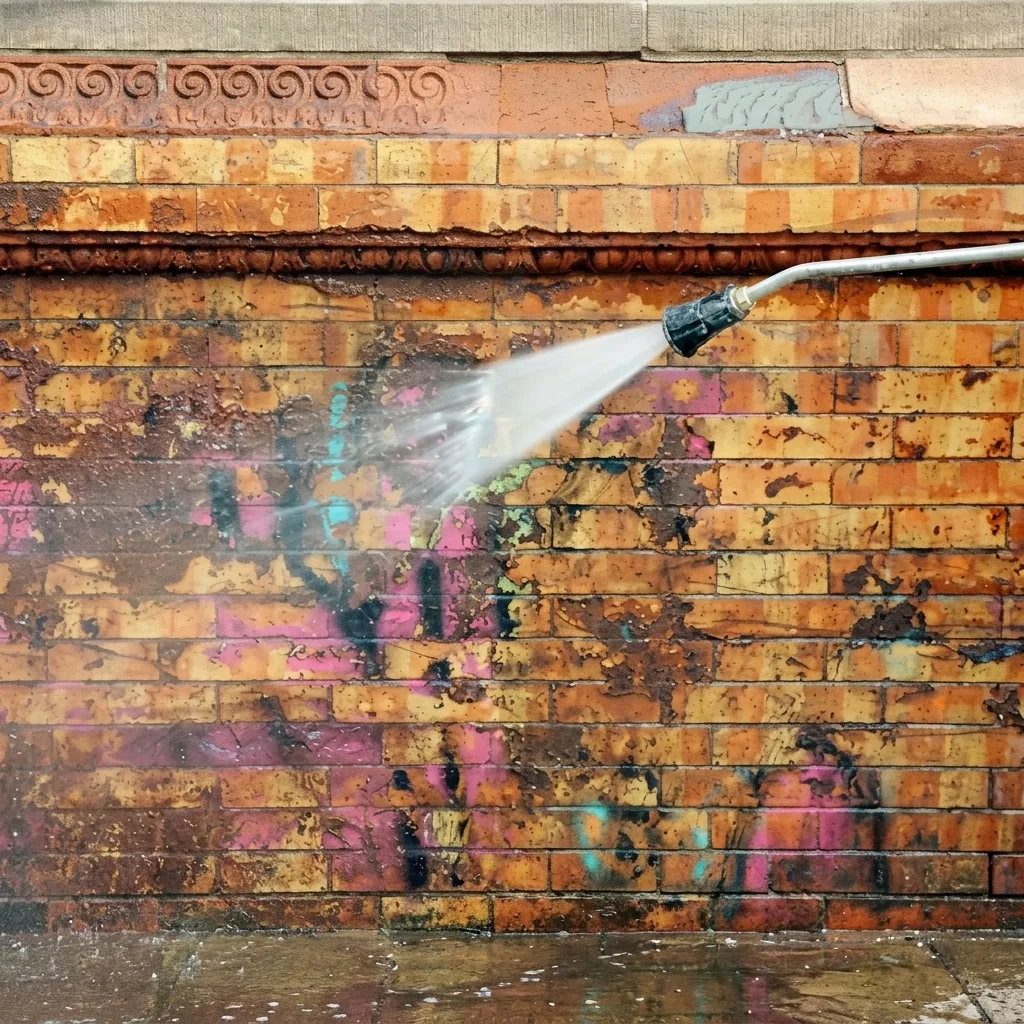
Remove Unwanted Markings and Help Restore the Appearance of Your Property
Graffiti can appear on exterior walls, masonry, concrete, gates, fences, utility enclosures, and other accessible surfaces. Even a small marking can stand out against an otherwise maintained property, particularly near entrances, storefronts, shared spaces, or street-facing walls. Leaving paint in place may also make the area appear neglected to visitors, customers, tenants, and neighbors.
Graffiti removal is not a one-method cleaning task. Porous materials may absorb pigment, while sealed or coated surfaces can react differently to cleaning products and agitation. Selecting a treatment based on the surface helps balance removal results with the need to preserve the existing material and finish.
- Reduce or remove unwanted spray paint, tagging, and other markings from suitable exterior surfaces
- Improve the presentation of visible walls, entrances, walkways, and other affected areas
- Address graffiti on compatible concrete, brick, stone, metal, vinyl, and selected painted surfaces
- Use a removal approach that considers the surface coating and the risk of discoloration, etching, or finish damage
- Help property owners prepare affected areas for repainting or other follow-up restoration when removal alone does not produce a uniform look
- Support routine property upkeep for residential, commercial, and other suitable exterior locations
Results depend on the surface porosity, type of paint, time since the marking appeared, previous coatings, and earlier removal attempts. Some pigment may remain in porous materials, and certain surfaces may require repainting or refinishing to achieve a consistent appearance. A careful assessment helps establish realistic expectations before work begins.
Graffiti Removal for Properties Throughout Our West Georgia Service Communities
Graffiti can affect different types of properties and surfaces, from street-facing masonry to painted walls, gates, and outdoor structures. We provide graffiti removal services in the communities below, with each project considered according to the affected material, marking, access, and condition of the existing finish. Select your area to explore local service information.
- LaGrange, GA : In LaGrange, graffiti removal can help property owners address unwanted markings on visible exterior walls, masonry, and other suitable surfaces. The treatment is selected around the substrate and existing finish so the affected area can be cleaned without unnecessary surface damage.
- Hogansville, GA : Hogansville properties can receive targeted graffiti removal for markings on entry areas, boundary walls, and compatible outdoor features. We consider the type of paint and how long it has been on the surface before determining an appropriate removal process.
- West Point, GA : For homes and businesses in West Point, graffiti removal can focus on affected walls, concrete sections, and other approved exterior materials. A surface review helps identify whether cleaning alone is suitable or whether a coating may need attention afterward.
- Newnan, GA : Newnan property owners can address spray-painted markings that distract from storefronts, exterior walls, and shared property areas. The work is planned around the visibility of the marking, material type, and the finish that should remain once the unwanted paint is treated.
- Senoia, GA : In Senoia, graffiti removal can help maintain the appearance of building exteriors, gates, and other suitable surfaces. Special care is considered for decorative finishes and textured materials that may be more sensitive to aggressive cleaning.
- Grantville, GA : Grantville customers can arrange graffiti removal for suitable exterior areas where tags or painted markings have become noticeable. The approach can be adjusted for the affected surface, whether it is masonry, concrete, metal, or a previously painted feature.
- Sharpsburg, GA : Graffiti on visible property features in Sharpsburg can be evaluated for targeted removal based on the marking and the material beneath it. We consider existing coatings and the possibility of shadowing or residual pigment before setting expectations for the finished area.
- Turin, GA : Turin property owners can focus graffiti removal on walls, fences, and other compatible exterior features affected by unwanted paint. The surface and surrounding area are considered so the selected method fits the location and avoids unnecessary impact on adjacent finishes.
- Moreland, GA : In Moreland, graffiti removal can be planned for affected masonry, concrete, or coated surfaces that need a cleaner presentation. Older markings and porous materials may require a different treatment than recent paint on a sealed surface.
- Haralson, GA : Haralson property owners can address unwanted markings on suitable exterior surfaces with a method chosen for the affected material. The condition of the original coating is reviewed to determine whether the area can be cleaned or may need repainting after treatment.
- Franklin, GA : For properties in Franklin, graffiti removal can help reduce the visual impact of tagging on exterior walls, entrances, and other approved areas. Project planning takes account of surface texture, paint type, access, and the appearance of nearby finishes.
- Centralhatchee, GA : Centralhatchee customers can arrange a review of graffiti affecting compatible surfaces around a home or business. The scope can focus on the specific marked section and identify whether removal, touch-up painting, or another restoration step is appropriate.
- Ephesus, GA : In Ephesus, graffiti removal can be considered for exterior structures and surfaces where unwanted paint has become a visible distraction. A careful assessment is important for older masonry, textured surfaces, and materials with existing protective coatings.
- Glenn, GA : Glenn property owners can address markings on suitable walls, gates, or other exterior features with surface-conscious cleaning. The treatment plan takes into account whether the paint sits on top of a coating or has penetrated a more porous substrate.
- Greenville, GA : Graffiti removal in Greenville can support a more orderly appearance for residential and commercial exteriors. The affected area is reviewed for material compatibility and possible color variation so the final result can be explained realistically before treatment.
- Manchester, GA : Manchester customers can seek graffiti removal for unwanted paint on accessible exterior surfaces, including suitable concrete and masonry. The project can be limited to the marked location while taking care to protect adjacent features and surrounding property.
- Woodbury, GA : In Woodbury, graffiti removal can help address paint markings that affect fences, exterior walls, and other compatible structures. The material's age and finish condition guide the choice of treatment and whether additional restoration should be considered.
- Warm Springs, GA : Warm Springs property owners can consider targeted graffiti removal when unwanted markings appear on visible exterior surfaces. The assessment accounts for the type of substrate and nearby landscaping or finishes that may need protection during the work.
- Luthersville, GA : Luthersville properties can receive graffiti removal attention for suitable painted, metal, concrete, or masonry areas. Older markings may leave shadows after treatment, so the cleaning plan should reflect the likely result for the specific surface.
- Gay, GA : In Gay, graffiti removal can help improve the appearance of affected outdoor property features through a treatment matched to the marking and material. Where color or coating damage remains, repainting or refinishing may be the next practical step.
Surfaces That May Be Suitable for Professional Graffiti Removal
The surfaces included in a graffiti removal project depend on the substrate, existing coating, type of marking, and condition of the affected area. Different materials require different considerations, and a test or compatibility review may be appropriate before broader treatment. Depending on the property, suitable work may include:
- Concrete walls and hard surfaces where the material and finish can tolerate the selected removal method
- Brick and masonry with attention to porosity, mortar joints, texture, and the risk of residual pigment
- Stone and other mineral surfaces when the material is compatible with the cleaning process and products
- Metal gates, doors, and panels where the paint can be treated without harming the underlying coating or finish
- Vinyl and selected exterior cladding using methods appropriate for the material's finish and manufacturer care instructions
- Previously painted walls and exterior features where removal can be performed without unacceptable damage to the original paint system
- Other approved exterior surfaces identified during the property review and included in the agreed scope
Some surfaces may be too fragile, weathered, porous, or damaged for a removal process that would be suitable elsewhere. When the original coating is compromised or pigment has penetrated deeply, repainting, refinishing, or surface repair may be needed to achieve a more uniform appearance.
Match the Graffiti Removal Method to the Surface Beneath the Paint
A removal technique that works on sealed concrete may not be appropriate for brick, painted siding, vinyl, or decorative metal. Surface porosity, coating type, texture, and age all influence how unwanted paint can be treated. Choosing the wrong process can cause discoloration, etching, coating loss, or damage to mortar and surrounding materials.
A surface-conscious approach considers the marking and the material together. Where appropriate, a small test area can help evaluate how the surface responds before treating a larger section. Cleaning products and equipment should be used according to their instructions, with attention to runoff and nearby landscaping, fixtures, and finishes.
Porous Masonry and Textured Walls May Need Additional Attention After Removal
Brick, block, concrete, and some stone surfaces contain pores and texture that can allow paint pigments to settle below the visible surface. Even after suitable removal work, a faint outline or color shadow may remain. The outcome depends on the type of paint, how long it has been present, the condition of the material, and any previous cleaning attempts.
Aggressive treatment is not automatically the answer for a stubborn mark. Excessive pressure or an incompatible product can damage the face of the material or its joints. The best next step may be another compatible treatment, a suitable coating system, or a restoration recommendation based on the surface's condition and the appearance required.
When Graffiti Removal Is Not Enough, Repainting Can Help Complete the Restoration
Removing unwanted paint does not always return a surface to its exact previous appearance. The original coating may already be faded, the graffiti may have penetrated a porous material, or earlier cleaning may have altered the surrounding finish. In these situations, a cleaned area can remain visibly different from the rest of the wall or feature.
Depending on the material and project needs, repainting or refinishing may provide a more consistent appearance after removal. The surface should be clean, stable, and properly prepared before a new coating is applied. Any underlying damage or moisture concern should be addressed first rather than simply covered with paint.
Reliable Graffiti Removal to Help Restore a Cleaner Property Appearance
When unwanted paint or tagging affects the appearance of your property, our painting and pressure washing services provide a starting point for planning the right exterior care. Our professional graffiti removal service can be tailored to suitable surfaces and the markings that need attention, while you can contact our team to discuss a graffiti removal estimate for your property.
We consider the surface material, existing finish, type of paint, and likely result before choosing a removal approach. Whether the affected area is a wall, masonry feature, gate, or another approved surface, the work should be planned around material compatibility and the condition of the surrounding property.
A Prompt Response and Routine Exterior Care Can Help Limit the Impact of Graffiti
When graffiti is discovered, documenting the affected area and arranging an assessment can help determine the best next step. The time since the marking appeared may influence removal results, although surface type and paint composition remain important factors. Property owners should avoid applying random solvents or abrasive methods that could spread the paint or damage the finish.
Keeping exterior surfaces maintained can also make new markings easier to identify and address. Periodic checks of visible walls, gates, entry areas, and other exposed features help property managers notice changes before they become part of a larger maintenance issue. Any preventive coating should be selected for the substrate and intended environment.
No coating or maintenance routine can guarantee that graffiti will not return. The right approach depends on the location, surface, exposure, and practical needs of the property.
A Considered Graffiti Removal Process From Initial Surface Review to Final Check
The project begins with identifying the marked area, the underlying material, and the condition of the existing finish. The type of paint, marking age, surface texture, access, and nearby property features are considered to determine whether the requested removal is suitable.
Next, the removal method and work area are planned around material compatibility and the agreed scope. Where appropriate, a test area can help evaluate the surface response. Nearby landscaping, windows, fixtures, and adjacent finishes are considered when preparing the area and managing cleaning runoff.
After treatment, the affected section can be reviewed for remaining paint, shadowing, or changes to the original finish. If the surface needs further restoration, options such as repainting or refinishing can be considered separately according to the material and desired appearance.
Signs Your Property May Need Professional Graffiti Removal or Surface Restoration
Unwanted markings can affect more than the appearance of a single wall. They may be highly visible near entrances, customer areas, walkways, or shared outdoor spaces. Consider arranging an assessment when you notice:
- Spray-painted tags, lettering, or symbols on exterior walls and other visible property features
- Unwanted paint on concrete, brick, block, stone, metal, vinyl, or other suitable surfaces
- Markings near building entrances, storefronts, gates, walkways, or outdoor service areas
- Older graffiti that has become difficult to address with ordinary surface cleaning
- Residual outlines or color shadows remaining after an earlier removal attempt
- Affected paint or coating that appears damaged and may need restoration after the marking is treated
- Multiple marked areas that would benefit from one coordinated property maintenance assessment
If the underlying material is cracked, loose, deteriorated, or otherwise unstable, repair may be needed before removal work proceeds. Identifying those conditions early helps avoid treating a surface in a way that could make existing damage worse.
What Matters When Planning Graffiti Removal for Your Property
- Consideration of the underlying material and existing coating before a removal method is selected
- Attention to the type of marking, paint, surface texture, and likely effect of the chosen treatment
- A defined work area identifying the affected surfaces included in the project
- Care around nearby landscaping, fixtures, windows, and adjacent finishes during the removal process
- Realistic expectations for porous or previously treated surfaces where residual shadowing may remain
- Recognition of conditions that may require repainting, refinishing, or separate surface repair
- Consideration of runoff management and product instructions where cleaning solutions are used
- Communication about the expected appearance and any limitations before work begins
What Can Influence the Scope and Cost of Professional Graffiti Removal?
Graffiti removal estimates can vary according to the size of the marked area, surface material, type of paint, age of the marking, and condition of the existing finish. Access, preparation, protection of nearby areas, and any follow-up restoration can also affect the work involved. A review of the property helps define a scope that reflects the specific marking and substrate.
- Size and number of affected areas — a small isolated marking differs from multiple or larger painted sections across a property
- Surface material and texture — porous masonry, concrete, metal, vinyl, and painted surfaces can require different removal considerations
- Type and age of the marking — paint composition, number of layers, and how long the graffiti has been present can influence the removal process
- Existing coating and surface condition — fading, peeling paint, previous treatments, or substrate damage may affect the appropriate method
- Access and property protection — height, location, nearby landscaping, fixtures, and runoff management can influence preparation
- Additional restoration needs — repainting, refinishing, or repair after removal may expand the requested project scope
Reviewing the marking and the affected material provides a more useful basis for discussing the removal approach, expected results, preparation, and any additional work that may be required.
Frequently Asked Questions About Graffiti Removal Services
Depending on the material and condition, graffiti removal may be suitable for concrete, brick, masonry, stone, metal, vinyl, and selected painted surfaces. Each substrate needs an appropriate method, and some delicate or deteriorated finishes may require another restoration approach.
Not every marking can be removed without leaving some discoloration or a faint shadow. Results depend on the paint, age of the marking, surface porosity, existing coating, and previous treatment. A surface assessment helps set realistic expectations before work begins.
An unsuitable cleaning method can damage an existing coating or substrate. The removal approach should be selected based on the material, finish, and type of marking. Where appropriate, a test area can help evaluate how the surface responds before broader treatment.
No. Pressure washing may be appropriate for some durable surfaces, but it is not suitable for every material or marking. Porous, painted, delicate, or aging surfaces may need a different method. The substrate and existing finish should guide the process.
Sometimes. If the original coating is damaged, faded, or visibly different after removal, repainting or refinishing may help create a more uniform appearance. The surface should be clean and stable before a new coating is applied.
Timing depends on the size of the affected area, surface material, type and age of the paint, access, and removal method. Multiple treatments or follow-up restoration may require additional time. A review of the marking helps establish a more realistic schedule.
Graffiti removal may be considered for suitable residential, commercial, and other exterior property surfaces. The location, access, surface type, and scope should be reviewed to determine whether the requested treatment is appropriate.
Additional Painting and Property Care Services Beyond Graffiti Removal
SEE WHAT OUR CUSTOMERS SAY ABOUT US
REVIEWS
REVIEW US ON GOOGLE
our process
Our process is simple and only contains a few steps
Proudly Serving tHESE aREAS
LaGrange, GA
Hogansville, GA
West Point, GA
Newnan, GA
Senoia, GA
Grantville, GA
Sharpsburg, GA
Turin, GA
Moreland, GA
Haralson, GA
Franklin, GA
Centralhatchee, GA
Ephesus, GA
Glenn, GA
greenville, GA
manchester, GA
woodbury, GA
warm springs, GA
luthersville, GA
gay, GA